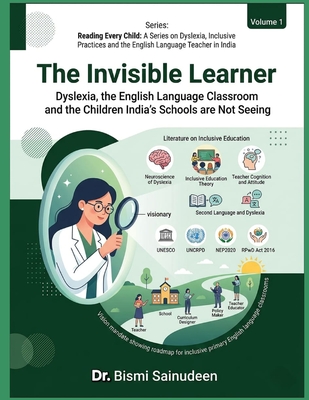
The Invisible Learner: Dyslexia, the English Language Classroom, and the Children India's Schools Are Not Seeing
An estimated 245,000 children with dyslexia sit in Kerala's primary school classrooms right now. Almost none of them have been identified. This book is about why - and what every English language teacher can do about it.

$14.61
An estimated 245,000 children with dyslexia sit in Kerala's primary school classrooms right now. Almost none of them have been identified. This book is about why - and what every English language teacher can do about it.
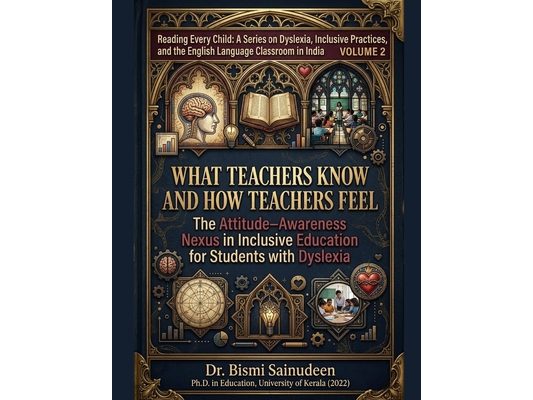
The Invisible Learner is Volume I of the Reading Every Child series, a scholarly and practitioner-focused series on dyslexia, inclusive education, and the English language classroom in India. Grounded in doctoral research conducted at the Government College of Teacher Education Research Centre, University of Kerala, and drawing on the best available international neuroscience, policy analysis, and pedagogical evidence, this volume builds the complete case for a fundamental reform of how India's primary schools view - and teach - children with dyslexia.
The child at the centre of this book is not a diagnosis. She is Ammu: bright, verbally quick, present in classrooms across Kerala every morning - and systematically failed by a system that was never designed to see her. The Invisible Learner is the story of why that happens, told through science, policy, and first principles. More urgently, it is the story of how it stops.What This Book Covers
Across seven evidence-driven chapters, The Invisible Learner provides: The complete neuroscience of dyslexia - from the phonological deficit hypothesis to brain imaging evidence - explained for the classroom teacher with no prior specialist trainingA rigorous analysis of India's inclusive education policy: Salamanca, UNCRPD, RPwD Act 2016, Sarva Shiksha Abhiyan, and NEP 2020 - what each promises, and why the gap between promise and classroom reality has persistedA first principles examination of why the English language classroom is uniquely high-stakes for students with dyslexia in the Indian context, including the linguistic and orthographic demands of English as a second or third languageA practical, three-level identification framework designed specifically for Kerala's primary schools, requiring no specialist equipment and no referral infrastructureConcrete roadmaps for teachers, school administrators, and policymakers - actionable from the first day of readingThe full findings of the doctoral research: what Kerala's primary English language teachers know, believe, and do about dyslexia - and what the data says needs to changeFor Whom This Book Is Written
This volume is written for four audiences simultaneously. For the classroom teacher, it provides the professional knowledge that initial teacher education has not delivered, and a clear protocol for identifying and supporting students with dyslexia beginning tomorrow. For the teacher educator, it provides a research base and a curriculum reform framework grounded in Kerala's own data. For the researcher, it synthesises the international evidence base and situates the Kerala findings within the global picture. For the policymaker, it documents the implementation gap with precision and translates the evidence into systemic recommendations that are both achievable and urgent.About the Author
Dr. Bismi Sainudeen holds a Ph.D. in Education from the University of Kerala and the UGC-NET & JRF in Education, UGC-NET in English, and SET in English. She has fifteen years of teaching and research experience spanning school education, undergraduate and postgraduate instruction, and scholarly inquiry across the Indian education system. She is the author of more than thirty-eight published books and has published extensively in peer-reviewed national and international journals. The Invisible Learner is the most ambitious scholarly project she has undertaken.
Series: Reading Every Child - A Series on Dyslexia, Inclusive Practices, and the English Language Teacher in India Volume: I of VII
REVIEWS
No product reviews yet.