The World Cup Is More Than a Soccer Tournament. It's a Classroom Hiding in Plain Sight.
The 2026 World Cup brings 48 countries to the field. Here's how to turn the tournament into a geography, culture, and language lesson all summer long.
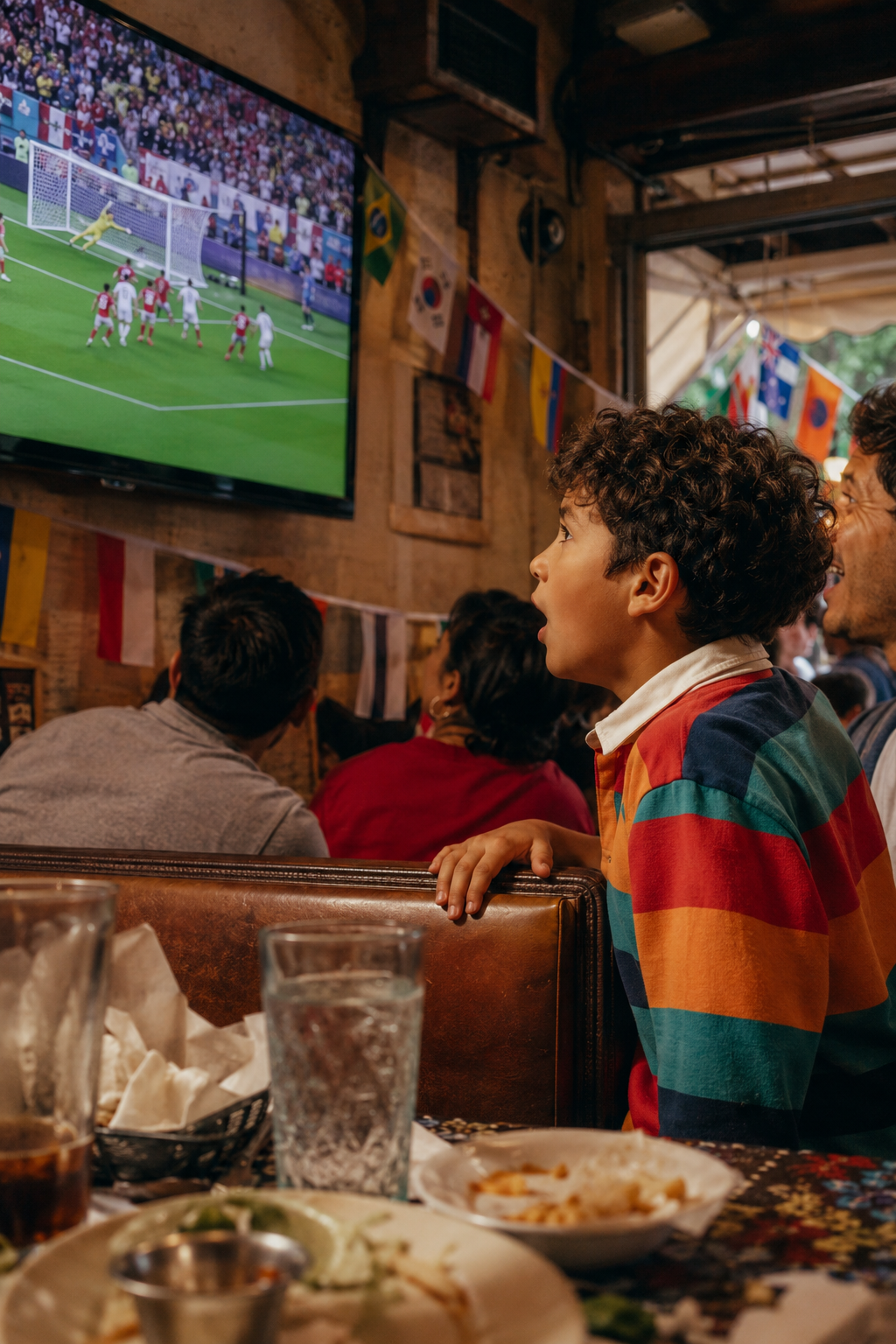
For the next few weeks, millions of families around the world will gather around the TV to watch the World Cup.
Some will cheer for their home country. Some will follow their favorite players. Some will simply enjoy the excitement.
But there's something else happening at the very same time.
Without opening a textbook, your family is surrounded by geography, history, math, languages, economics, and culture. The learning is already there. The World Cup simply gives it a story.
That's what makes moments like this so powerful.
Why This Year's Tournament Is Worth Paying Attention To
The 2026 World Cup is the biggest in history.
For the first time, 48 countries are competing instead of 32. The tournament is being hosted across the United States, Canada, and Mexico, with matches taking place in cities throughout North America before the championship arrives at MetLife Stadium on July 19.
More countries means more stories.
Maybe your child has never heard of Morocco, Panama, Georgia, or Uzbekistan. Then one great match turns into a simple question.
"Where is that?"
That single question is worth far more than memorizing a map.
Because curiosity came first.
Follow the Curiosity
The best learning rarely begins with a lesson plan.
It begins with something your child already cares about.
While you're watching a match together, try following wherever their curiosity leads.
A few simple ideas:
- Find one country on a map and see what surrounds it.
- Look up the language spoken there and listen for it during the broadcast.
- Talk about why three countries are hosting one tournament together.
- Follow the bracket and let kids figure out who advances and why.
- Compare populations, climates, currencies, or time zones between teams.
None of this needs to become homework.
Just conversations.
Those are often the moments kids remember longest.
Every Match Connects to Something Bigger
One game can lead to dozens of different subjects.
A penalty shootout becomes probability.
A host city becomes economics.
A national anthem becomes language.
A country's history explains why its borders look the way they do today.
Learning doesn't have to stay inside one subject because life doesn't.
The Bigger Lesson
One of the best parts of learning is discovering that it doesn't only happen at a desk.
It happens while watching a soccer match.
While cooking dinner.
While traveling.
While asking questions no curriculum could have predicted.
The World Cup is simply one more reminder that education is everywhere when we know where to look.
At Node, that's exactly what we believe.
Whether today's curiosity starts with soccer, space, music, books, art, coding, or baking, there's always another path to explore.
Sometimes all it takes is one question.