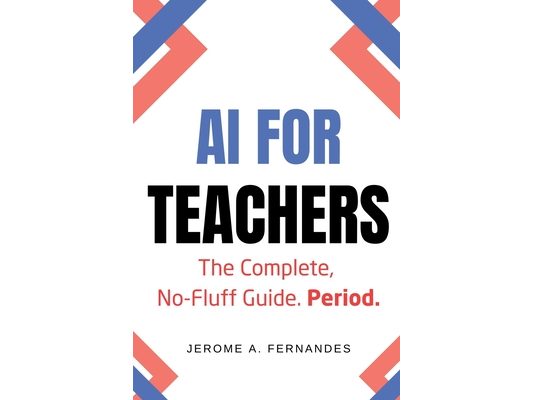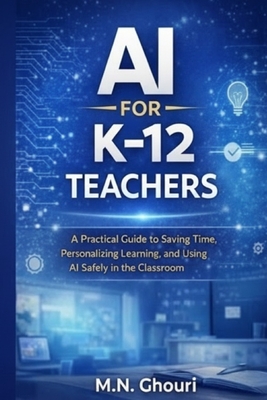
AI for K-12 Teachers: A Practical Guide to Saving Time, Personalizing Learning, and Using Artificial Intelligence Safely in the Classroom
Artificial intelligence is rapidly transforming education, reshaping how knowledge is created, taught, and evaluated. For educators, the real challenge is not keeping up with new technology-but understanding how to apply AI in ways that strengthen learning, protect academic integrity, and preserve human thinking.

$9.51
Artificial intelligence is rapidly transforming education, reshaping how knowledge is created, taught, and evaluated. For educators, the real challenge is not keeping up with new technology-but understanding how to apply AI in ways that strengthen learning, protect academic integrity, and preserve human thinking.
This comprehensive guide helps educators navigate the practical realities of AI-enabled teaching. Designed for teachers, instructional designers, and academic leaders, the book provides clear frameworks for integrating artificial intelligence into curriculum planning, classroom instruction, and assessment-without replacing professional judgment or pedagogical intent.
Rather than focusing on tools alone, this book examines how AI changes the structure of learning itself. Readers will explore curriculum-aligned strategies for lesson design, inquiry-based learning, simulations, and authentic assessments that encourage critical thinking and responsible technology use. Ethical considerations, information literacy, and classroom policies are addressed with clarity and balance.
Inside this guide, educators will learn how to:
Design instruction that uses AI as a learning support, not a shortcut
Adapt assignments and assessments for an AI-influenced classroom
Strengthen critical thinking, creativity, and problem-solving skills
Address academic honesty, misuse, and evaluation challenges
Integrate AI responsibly across subjects and learning levels
Prepare students for future careers shaped by intelligent systems
Grounded in educational practice and instructional research, this book empowers educators to lead with confidence in a rapidly evolving digital environment. It supports thoughtful adoption of technology while reinforcing the enduring role of teachers, curriculum design, and human judgment.
Whether used for professional development, teacher education programs, or institutional curriculum planning, this guide serves as a practical roadmap for building future-ready learning environments that balance innovation, ethics, and educational purpose.
REVIEWS
No product reviews yet.