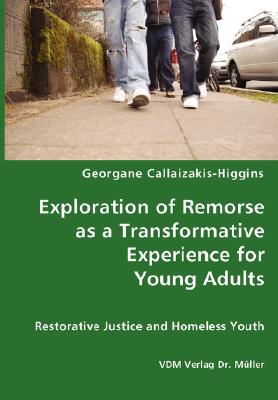
Exploration of Remorse as a Transformative Experience for Young Adults - Restorative Justice and Homeless Youth
In criminal justice, restorative justice holds great promise where punitive regimes often fall short; remorse appears to be a key element for success. While remorse may strongly influence course and outcome of cases in legal systems, these systems provide little guidance on assessing expression of remorse. This book explores the experience of remorse for a population of at-risk adolescents aged 18 through 21. The exploration includes: review of literature on restorative justice, remorse and apology, law, developmental psychology, and philosophy; empirical data analysis; and primary research through paper and pencil tests, focus groups, and individual case studies. Results indicate remorse can give these youth hope and be a catalyst for transformation in their lives. Additionally, remorse plays a necessary role in restorative justice when offenders are able to own and demonstrate an understanding of impact of their actions on both self and others. Relationships can then be constructively developed between perpetrator and victim, leading to forgiveness and even transformation. This book is directed to professionals in forensic psychology and criminal and restorative justice systems.

$48.99
OVERVIEW
In criminal justice, restorative justice holds great promise where punitive regimes often fall short; remorse appears to be a key element for success. While remorse may strongly influence course and outcome of cases in legal systems, these systems provide little guidance on assessing expression of remorse. This book explores the experience of remorse for a population of at-risk adolescents aged 18 through 21. The exploration includes: review of literature on restorative justice, remorse and apology, law, developmental psychology, and philosophy; empirical data analysis; and primary research through paper and pencil tests, focus groups, and individual case studies. Results indicate remorse can give these youth hope and be a catalyst for transformation in their lives. Additionally, remorse plays a necessary role in restorative justice when offenders are able to own and demonstrate an understanding of impact of their actions on both self and others. Relationships can then be constructively developed between perpetrator and victim, leading to forgiveness and even transformation. This book is directed to professionals in forensic psychology and criminal and restorative justice systems.
Resource type
- books
Learning context
- for all
Activity type
- independent work
Learning environment
- on campus
- at home
REVIEWS
No product reviews yet.